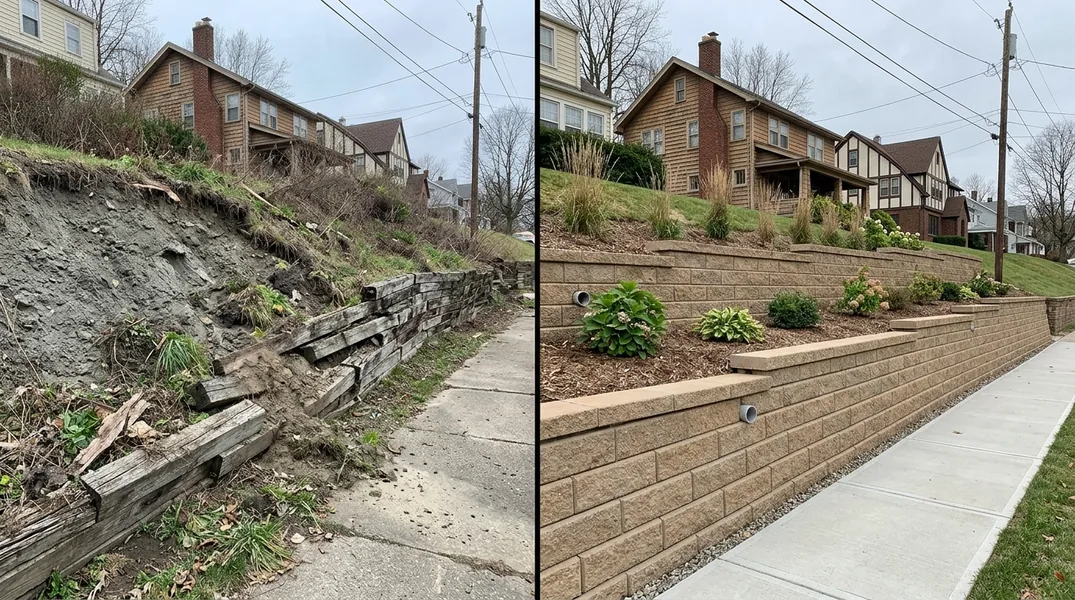
Why Retaining Walls Lean and What It Means for Your Property
A leaning retaining wall is more than an eyesore. It is a warning sign that the forces behind the wall, primarily soil pressure and water, have overwhelmed its design or its drainage system. In Cleveland, the freeze-thaw cycle makes this especially common. Water seeps into the soil behind the wall, freezes, expands, and pushes the wall outward. Over time, even a well-built wall can begin to tilt.
The direction and severity of the lean tell a story. A slight forward tilt at the top may indicate that the footing is still stable and the problem is manageable. A wall that leans noticeably or shows bulging in the middle is under serious stress and may be at risk of collapse. Homeowners in Lakewood and other older suburbs often deal with walls that were built decades ago without modern drainage materials, making them prime candidates for this issue. Understanding the cause is the first step toward choosing between repair and replacement.
Signs That Retaining Wall Repair Is Still an Option
Not every leaning wall needs to be torn down. If the lean is minor (typically less than a few inches over the wall's height) and the wall itself is structurally sound, Retaining Wall Repair can often restore stability at a fraction of the cost of replacement. Common repair methods include improving drainage behind the wall, replacing failed backfill, and using anchors or helical tiebacks to pull the wall back into position. Cracked mortar joints and small fissures can also be addressed with retaining wall crack repair, which prevents water from entering and worsening the problem.
The key is catching the issue early. A wall that has just started to lean and shows no major structural cracking is a good candidate for repair. However, if the wall is made of deteriorating materials, such as old timber that has rotted or concrete that is crumbling, repair may only be a temporary fix. A professional assessment can determine whether the footing is intact and whether the wall can be stabilized without a full rebuild. For homeowners in Parma, where many properties have older walls, this evaluation is essential before committing to a repair strategy.
When Retaining Wall Replacement Is the Better Investment
Sometimes replacement is the only safe and sensible choice. If a wall is leaning significantly, has large cracks, or has already failed in sections, repairing it may be throwing good money after bad. A wall that is more than a few decades old and was built with inadequate drainage is often a candidate for Retaining Wall Replacement. Modern walls are designed with proper drainage, geogrid reinforcement, and materials that stand up to Cleveland's weather far better than older construction.
Replacement also gives you the opportunity to upgrade. Many homeowners choose Concrete Retaining Walls for their durability and low maintenance, while others prefer segmental block or natural stone. A new wall can be engineered to handle the specific soil and water conditions on your property, reducing the likelihood of future problems. In Cleveland Heights, where mature trees and sloped lots are common, a properly engineered replacement can also improve drainage and protect your home's foundation. If you are unsure which path makes sense, a free estimate from a local professional can give you a clear answer.
Retaining Wall Repair Near Me: How to Choose the Right Approach
Searching for "retaining wall repair near me" in Cleveland brings up plenty of options, but not all contractors are equipped to diagnose and fix a leaning wall correctly. A proper evaluation should include an inspection of the wall's footing, drainage system, and the soil behind it. The contractor should be able to explain whether the wall can be stabilized with anchors or if the damage has progressed too far. Experience with local soil conditions and freeze-thaw cycles matters, so look for a company that regularly works in the area.
Cost is another factor. Repair is generally less expensive than replacement, but if the repair is likely to fail within a few years, replacement may be more cost-effective in the long run. Ask for a detailed written estimate that explains the scope of work and the expected lifespan of the fix. A reputable contractor will not push replacement if a repair will do the job, and will not promise a repair if the wall is beyond saving. For a straightforward assessment, call Cleveland Retaining Wall at (216) 640-7629 or request a free estimate online.
Retaining Wall Repair Cost in Cleveland: What to Budget
The cost of addressing a leaning retaining wall varies widely based on the wall's size, materials, and the extent of the damage. Minor repairs, such as crack sealing or improving drainage, are typically the least expensive option. More involved repairs, like installing anchors or rebuilding a section of the wall, cost more but can extend the life of the structure significantly. Replacement is the largest investment, but it comes with the benefit of a new, engineered wall that should last for decades.
For a realistic budget, homeowners should request a pricing estimate based on an on-site inspection. Factors like access to the wall, the height of the wall, and the type of materials chosen will all affect the final number. It is also worth asking about warranties, as a reputable installer will stand behind their work. In Cleveland, where winter weather puts extra stress on retaining walls, investing in a proper repair or replacement now can prevent more costly damage to your landscaping and foundation later. Contact Cleveland Retaining Wall at (216) 640-7629 to discuss your options and get a clear picture of what your project will cost.
Looking for a professional retaining wall contractor in Cleveland? Cleveland Retaining Wall responds fast for all your retaining wall needs.
Get a Free QuoteOur services: Retaining Wall Installation · Retaining Wall Repair · Retaining Wall Replacement