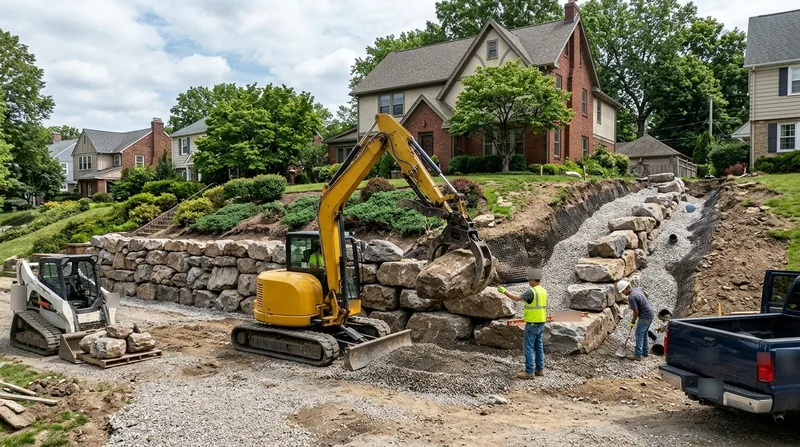




Boulder & Natural Stone Walls in Cleveland
Cleveland sits on a flat lake plain cut by steep ravines along the Cuyahoga, Rocky River, Big Creek and Doan Brook, and that ravine-edge terrain is exactly where Boulder & Natural Stone Walls in Cleveland earn their keep. In Tremont and Ohio City, narrow lots behind 1900s frame doubles need a wall that holds a small grade change without eating the yard. In Cleveland Heights and Shaker Heights, wooded rolling lots call for sandstone that looks like it grew there. Along the Lake Erie bluffs in Lakewood and Bay Village, heavy rock does the work that stacked block cannot. We set machine-placed boulders and natural stone on a properly prepared base with real drainage, so the wall sheds our freeze-thaw cycles instead of heaving. If your existing wall is already leaning or bulging, start with leaning and collapsed wall repair before we talk about new stone.
Why Natural Stone and Boulder Walls Fit Cleveland's Ravine Lots
Dense glacial clay and till sit under most of this city, and the water table stays high through spring. That combination pushes on any wall, and the failure we see most is frost heave and toe kick-out after a hard freeze-thaw winter. Boulder walls handle that movement better than rigid mortar because each rock can shift slightly and settle back. They also suit the wooded, ravine-edge lots in Cleveland Heights, where a crisp concrete face looks out of place against hemlock and oak.
- We build boulder walls on ravine lips along Doan Brook where soil creeps downhill every spring.
- We place sandstone terracing on Shaker Heights lots that slope down toward the street.
- We reset and rebuild old Berea sandstone block walls that have rotated out of line.
- We replace rotting 1970s railroad tie walls in Parma and Strongsville with natural rock.
Every one of those jobs starts with the same question: where does the water go when the ground thaws in March?
Key info: A boulder wall on a ravine lot in Cleveland Heights failed last spring because the original builder backfilled with clay and no drain. We rebuilt it with washed stone, filter fabric and a perforated footing drain, and it has held through two freeze-thaw seasons.
Permits are handled by your local building department, and thresholds vary, so confirm the rule for your address before we mobilize. The City of Cleveland's building and housing department is the place to start: clevelandohio.gov building and housing.
How We Build a Boulder Wall That Survives a Cleveland Winter
We do not drop rock on topsoil and call it a wall. The base gets excavated to undisturbed soil or compacted structural fill, then we set the first course below grade so frost cannot lift it. We pitch each boulder with its long axis into the slope, choke the gaps with smaller stone, and run drainage behind the face. On wooded lots we work around root zones and keep machine access tight.
- We walk the slope and mark the wall line, checking setbacks from the property line.
- We excavate the footing trench to solid bearing and compact the base in lifts.
- We set the bottom course below frost depth and batter the wall back into the hill.
- We install filter fabric, washed drainage stone and a perforated pipe at the footing.
- We place and seat each boulder with an excavator and hand-set the cap rocks.
- We backfill with free-draining material and restore the grade behind the wall.
That sequence is why our stone walls stay put when the clay around them is still moving.
Key info: On a Bay Village bluff lot, we could not get a truck within 60 feet of the wall line. We staged rock on the driveway and ran a mini excavator down the slope, which added a day but kept the existing landscaping and the neighbor's fence intact.
If the grade behind the wall is the real problem, pair the stone with our slope stabilization and erosion control work so the hill stops feeding the wall.
Boulder Wall Approaches We Use Across Cleveland
Not every yard wants the same look or the same structure. A garden terrace in Lakewood and a tall ravine wall in Cleveland Heights are different engineering problems, so we match the method to the site, the load above it and the stone available.
| Approach | Description | Best for |
|---|---|---|
| Dry-stacked boulder wall | Machine-placed rock, no mortar, choked with smaller stone and drained at the footing. | Ravine lips, wooded lots, walls up to about 4 feet. |
| Sandstone block wall | Cut or reclaimed Berea sandstone laid in courses with a compacted base. | Terraces and garden walls on Shaker Heights and Cleveland Heights lots. |
| Boulder toe with planted slope | Rock at the base, native plantings and erosion blanket above. | Long, shallow slopes where a full wall is overkill. |
| Engineered tall rock wall | Geogrid, select backfill and stamped drawings for walls over the local permit threshold. | Driveway walls and structural walls in Parma and Strongsville. |
| Sandstone wall restoration | Reset and re-lay original stone from a failed 1920s wall. | Historic walls in Tremont and Ohio City. |
We pick the approach after we see the soil, the slope and the load above the wall, not before.
Boulder & Natural Stone Walls Cost in Cleveland: What to Expect
Natural stone pricing starts at From $25 per square foot for a standard dry-stacked boulder wall with proper base and drainage. That figure moves with stone type, wall height, batter and how far the rock has to travel from the truck. Reclaimed Berea sandstone costs more than quarry boulders, and a wall over 4 feet with geogrid and engineering adds to the number.
Access is the quiet cost driver in this city. Narrow lots in Tremont and Ohio City often mean staging rock on the street and carrying it by hand or mini excavator. Proximity to structures matters too: a wall 3 feet from a garage foundation needs more care and slower digging than one at the back of a Parma lot.
Get two or three written estimates and compare what is included, especially drainage and backfill. A low bid that skips the footing drain will cost you again in five winters. Our full retaining wall pricing overview breaks down the line items.
Boulder & Natural Stone Walls Near Me: Hiring a Contractor Near Cleveland
Ask for a certificate of insurance before work starts, and confirm the contractor carries general liability and workers' compensation. Ask for references from jobs in your suburb, not just photos of a wall in another county. Check whether the company pulls permits itself or leaves that to you. And ask how they handle drainage, because a stone wall without a drain is a leaning wall waiting to happen.
If your lot sits under HOA rules or near a protected tree, get the approval in writing before the excavator shows up. Reach out through our contact and free estimate page to set up a site visit.
For homeowners comparing options, our retaining wall installation page covers the broader process, and the Cleveland 44101 service page lists what we handle in the city core.
Boulder & Natural Stone Walls in Cleveland: Pricing Guide
| Service | Price | Details |
|---|---|---|
| Dry-stacked boulder wall | Starting at $25/sq ft | Includes base excavation, drainage stone and perforated footing drain; height and access move the price. |
| Reclaimed sandstone block wall | Starting at $38/sq ft | Cut or reclaimed Berea sandstone laid in courses; stone availability and wall length drive the number. |
| Tall or engineered rock wall | On estimate | Walls over the local permit threshold need geogrid, select backfill and stamped drawings before pricing. |
| Sandstone wall restoration | On estimate | Resetting original stone on a failed 1920s wall depends on how much rock can be salvaged and reused. |
| Travel | Included | In Cleveland and surrounding areas, no separate call-out or mileage fee. |
| Estimate | Free | Response within 24h at (216) 640-7629, no obligation to book. |
Indicative pricing, the exact cost depends on square footage, finish, and site access. Free personalized estimate within 24h at (216) 640-7629.


